
Laura's Experience
Laura recently began balancing studies, part-time work, and participation in a youth project abroad. She wants to succeed in every area of her life and tries to manage all responsibilities independently. At first, she feels motivated and determined to prove that she can handle everything successfully.

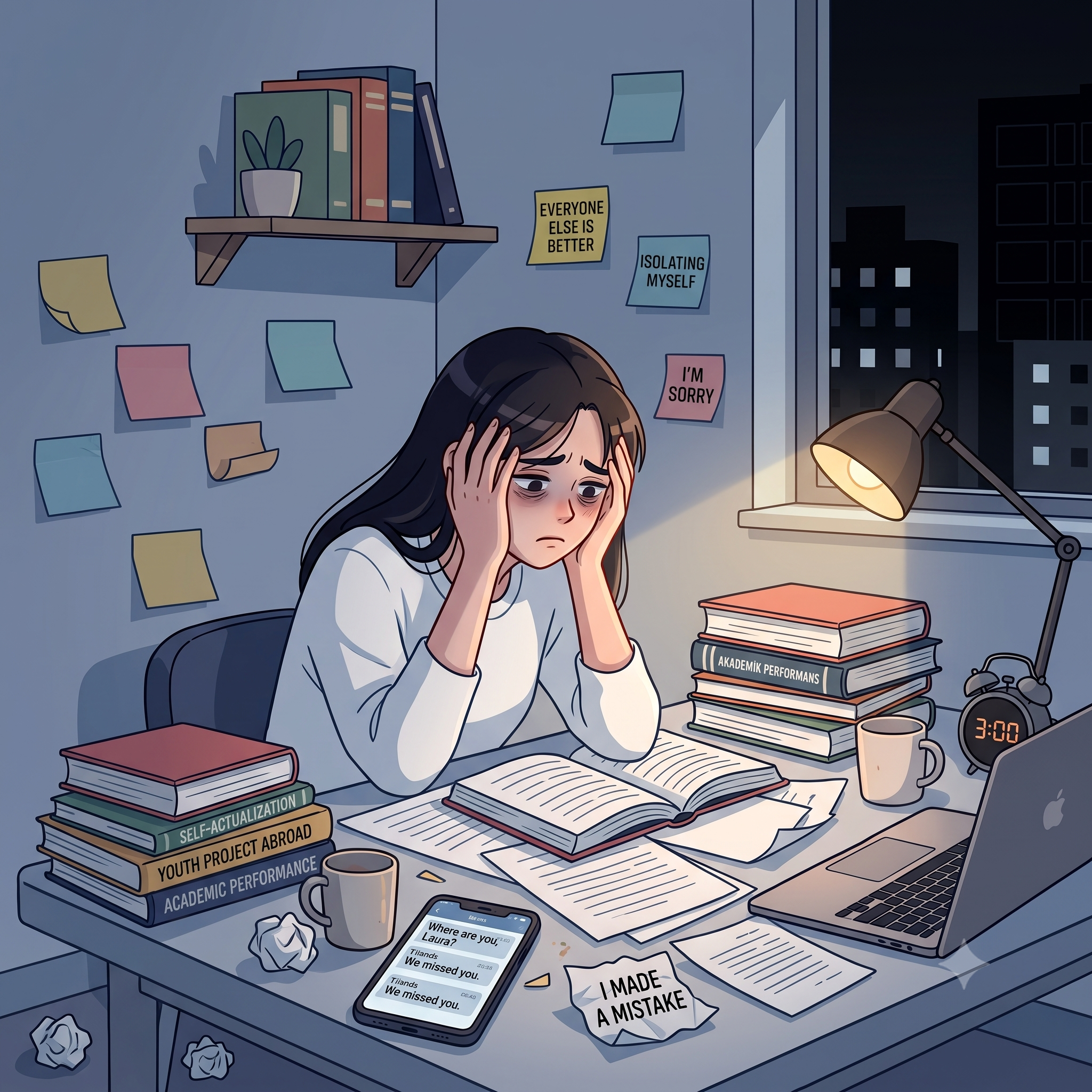
After several months, however, Laura begins to sleep poorly, lose motivation, and feel emotionally exhausted. The constant pressure of deadlines, responsibilities, and expectations is starting to affect her concentration, energy, and emotional well-being.
Whenever Laura makes small mistakes, she becomes very critical of herself and feels that she is not doing enough. She compares herself to others and worries that everyone else seems more organized, confident, and successful.
Over time, Laura begins withdrawing from friends and social activities because she feels embarrassed about struggling. Instead of asking for support, she tries to hide her stress and continues pushing herself harder.
As the emotional pressure continues, Laura feels increasingly overwhelmed and unsure how to regain balance between her responsibilities, wellbeing, and personal needs.
One evening, Laura speaks with a mentor about her stress and emotional exhaustion. She slowly realises that rest, support, and self-care are important parts of emotional wellbeing.
Laura begins to understand that asking for help is a sign of strength, not weakness, and that taking care of herself is essential to achieving her goals sustainably.
Reflection Questions
Signs of Burnout
What signs suggest that Laura may be experiencing emotional exhaustion or burnout?
Shame Around Support
Why do people sometimes feel ashamed to ask for emotional support?
Healthy Coping Strategies
What healthy coping strategies or supportive routines could help Laura regain balance?